September 7, 2026
Inside the first high availability demonstration on an O-PAS-based system.
Process automation plants do not stop. Refineries, chemical plants, water treatment facilities, and power generation sites run 24 hours a day, 7 days a week. Unplanned downtime is not an inconvenience. It is a cost event.
Industry estimates put the average cost of unplanned downtime in process industries at more than $250,000 per hour. In some sectors (upstream oil and gas, for instance) that number is higher.
That reality shaped how automation vendors designed their systems. The answer, for decades, was redundancy built into proprietary hardware. Honeywell's Experion, Emerson's DeltaV, and Siemens PCS 7 each had their version of high availability (HA). Hot standby controllers. Redundant networks. Failover that happened in milliseconds while the process continued.
It worked. Customers bought the reliability.
They also bought the ecosystem: the hardware, the software, the support contracts, and the upgrade cycles. They stayed in it, because leaving meant risking what they had paid to protect.
The Open Process Automation Standard (O-PAS) changed the premise. It was developed by the Open Group's Open Process Automation Forum (OPAF). O-PAS defines an interoperable, standards-based architecture. Hardware and software from different vendors work together in a single system.
For buyers, the advantages are direct: competitive procurement, easier component swaps, and longer system life. There is no single-vendor dependency, from hardware refresh cycles to security patches.
For SIs and OT vendors, it opens a market that proprietary systems have controlled for 30 years.
But skeptics had a fair question. Can an open, multi-vendor system actually deliver the same reliability as a proprietary one?
High availability was the gap nobody had publicly closed. Until now.
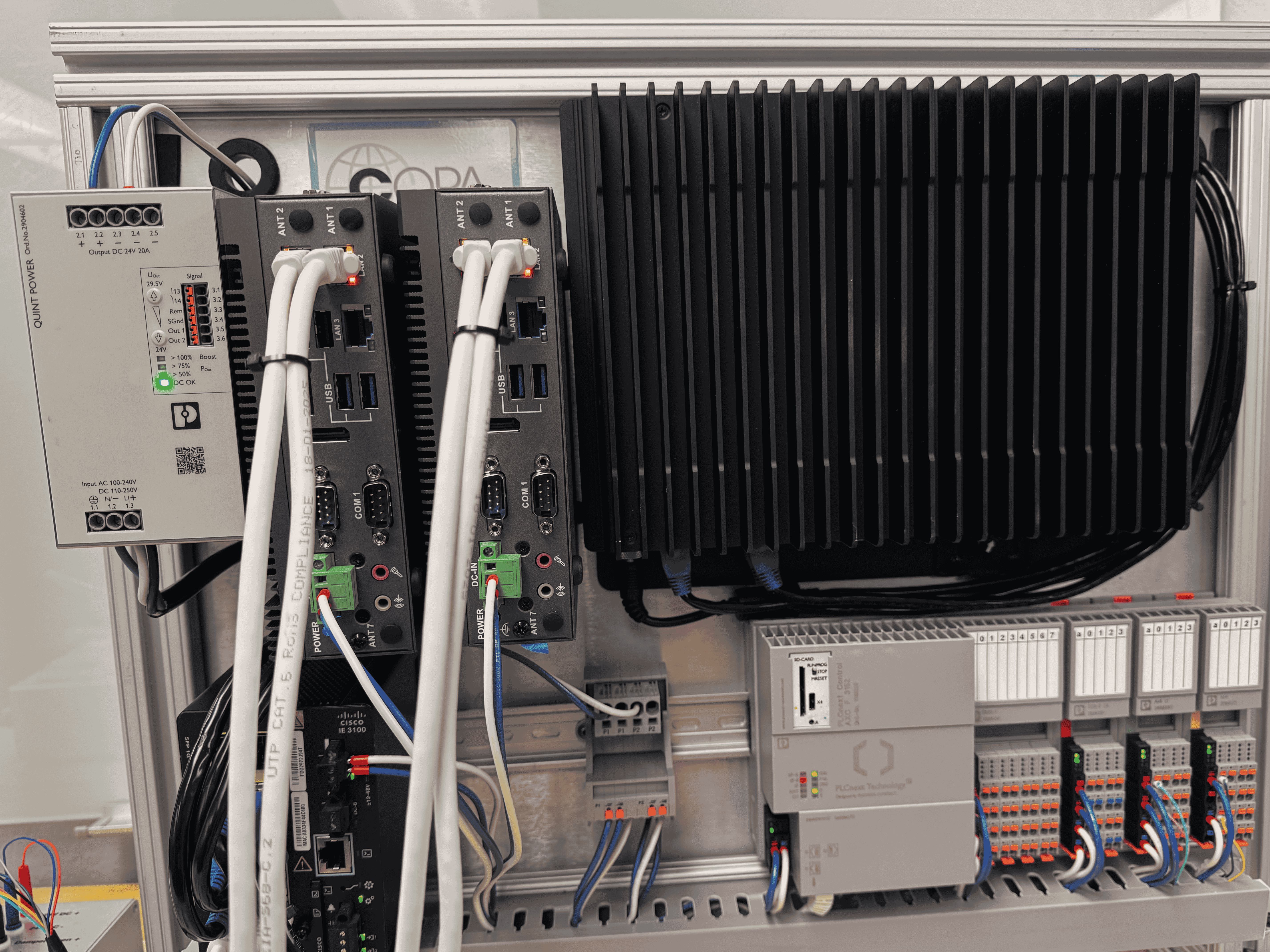
The COPA 500 is an O-PAS-based industrial automation platform. The hardware in this demo includes:
The software stack includes:
Every hardware and software component is from a different source. All are O-PAS compliant.
The demo runs real process control. A fan keeps a ping-pong ball floating at a set height inside a tube. A sensor at the top reads ball position. The HMI displays the live setpoint in real time. It is a small system doing exactly what a large plant does: continuous closed-loop control.
Here is what happens when DCN1 goes down.
DCN2 (which had been running as the follower) becomes the leader. The ball does not drop. The HMI does not freeze. Control continues without interruption. DCN2 is then shut down deliberately. The system gracefully halts. DCN2 reconnects and comes back online. The ball returns to setpoint. DCN1 plugs back in. It joins as the follower. DCN2 leads. The system runs.
Failover without interrupting the process. Multi-vendor stack. O-PAS compliant throughout.
Previous high availability work in the open automation world was mostly theoretical: architecture documents, forum working groups, and reference designs. This is the first publicly demonstrated HA solution on a functioning O-PAS-based system. It uses hardware and software from multiple vendors.
That distinction matters for buying committees.
"Our engineers need to see it work" is not an unusual request. It is one of the most common responses when open automation comes up in early-stage evaluations. A working lab demo with real hardware and documented component sources is different from a reference architecture on a slide. It gives procurement teams something concrete to evaluate. SIs have something real to reference when they specify a system.
It also confirms that the multi-vendor model does not require custom engineering. Every component in this demo is commercially available today. The software stack is supported. The failover behavior is not a patch. It is the system working as designed, with the O-PAS standard doing what it was written to do.
The case for staying inside a proprietary ecosystem has historically rested on three pillars: integration support, single accountability (one vendor to call when something breaks), and reliability.
The first two are fair debates. The open automation ecosystem is building the competency and support infrastructure to address them. The SI community is developing real deployment experience. CPLANE provides platform support for every layer of the COPA 500 stack.
Reliability is no longer a debate. This demo closes it.
If you are evaluating open architecture for a new build or a modernization project, the COPA 500 is the platform to look at. If you have questions about HA fit for a specific application, talk with an expert.
The last argument just got harder to make.
{"@context":"https://schema.org","@graph":[{"@type":"Article","@id":"https://www.cplaneai.com/resources/reliability-was-the-last-argument-for-staying-proprietary#article","headline":"Reliability Was the Last Argument for Staying Proprietary","description":"Inside the first high availability demonstration on an O-PAS-based system.","datePublished":"2026-09-07","image":"https://cdn.prod.website-files.com/6a457bcd33376d2561fe71d5/6a7f656a36bfdee247460bd9_6a7f650f51502a3ce381a936_copa-500-latest.jpeg","author":{"@type":"Organization","name":"CPLANE","url":"https://www.cplaneai.com"},"publisher":{"@id":"https://www.cplaneai.com/#organization"},"url":"https://www.cplaneai.com/resources/reliability-was-the-last-argument-for-staying-proprietary","mainEntityOfPage":{"@id":"https://www.cplaneai.com/resources/reliability-was-the-last-argument-for-staying-proprietary#webpage"},"inLanguage":"en-US"},{"@type":"WebPage","@id":"https://www.cplaneai.com/resources/reliability-was-the-last-argument-for-staying-proprietary#webpage","url":"https://www.cplaneai.com/resources/reliability-was-the-last-argument-for-staying-proprietary","name":"Reliability Was the Last Argument for Staying Proprietary | CPLANE","description":"Inside the first high availability demonstration on an O-PAS-based system.","isPartOf":{"@id":"https://www.cplaneai.com/#website"},"about":{"@id":"https://www.cplaneai.com/#organization"},"inLanguage":"en-US"},{"@type":"BreadcrumbList","itemListElement":[{"@type":"ListItem","position":1,"name":"Home","item":"https://www.cplaneai.com/"},{"@type":"ListItem","position":2,"name":"Resources","item":"https://www.cplaneai.com/resources"},{"@type":"ListItem","position":3,"name":"Reliability Was the Last Argument for Staying Proprietary","item":"https://www.cplaneai.com/resources/reliability-was-the-last-argument-for-staying-proprietary"}]}]}